
In Afro-Cuban traditions, the dancers and musicians are not separate. They work together as one.
Pitch Black at MoCADA
Today was one of the most immersive experiences of my fellowship so far. During the day, I visited MoCADA's Pitch Black: Haiti and Congo Revisited exhibition, which explored the historical and cultural connections between Haiti and the Democratic Republic of Congo. The exhibition emphasized how the African diaspora has preserved culture across continents through history, art, and shared traditions.
Dancers and Musicians as One
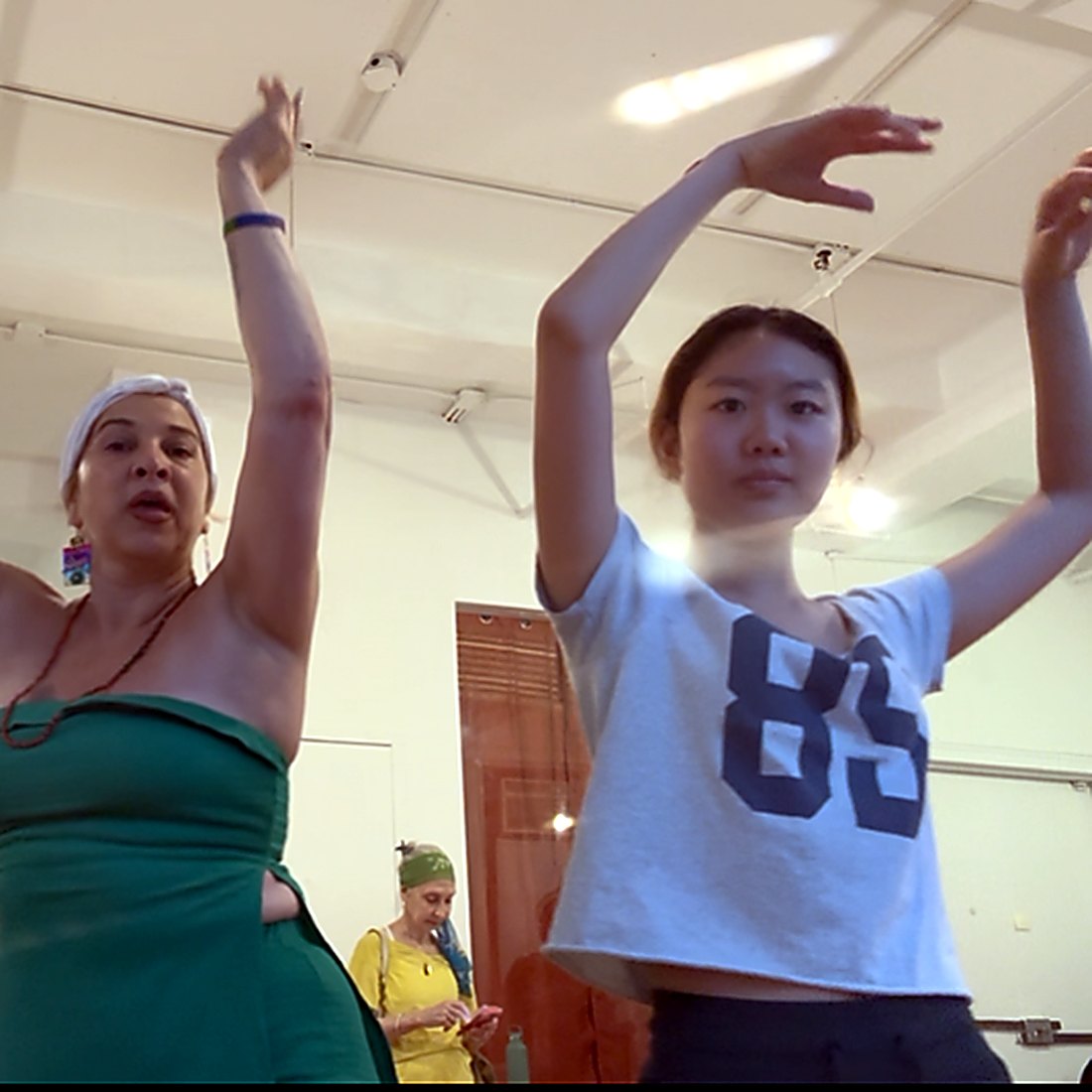
In the evening, I attended an Afro-Cuban dance class taught by Jinae Suire at World Arts East. Before we even started dancing, Jinae explained that in Afro-Cuban traditions, the dancers and musicians are not separate. Instead, they work together as one. Throughout class, the drummers sang while playing traditional rhythms, reminding us that movement and music are inseparable.
We learned Orisha dances, which originated with the Yoruba people of present-day Nigeria and were brought to Cuba through the African diaspora. Each movement carried symbolic meaning rather than simply being choreography.
One section represented Oyá, the orisha of wind, storms, and transformation. We performed sweeping arm movements and fast turns that mimicked powerful winds and tornadoes. Jinae explained that these movements honored both nature and the ancestors.
Another section represented Ogún, the orisha associated with iron, labor, and warriors. The movements felt completely different—strong, grounded, and repetitive. Some gestures resembled holding a machete, symbolizing both protection and hard work. She reminded us to keep serious facial expressions because every part of the body, including the face, contributes to the story being told.
The class ended with everyone standing in a circle before sitting down to stretch. We then lay on the floor in silence, connecting ourselves to the earth and reflecting on the experience. It was a peaceful ending that emphasized nature's importance within Afro-Cuban traditions.
Today's museum visit and dance class complemented one another perfectly. The exhibition showed how culture survives through history and community, while the dance class demonstrated how those same traditions continue to be preserved through movement, music, and ritual. It reinforced that dance is far more than performance. Instead, it's a way of carrying history, spirituality, and cultural identity across generations.