
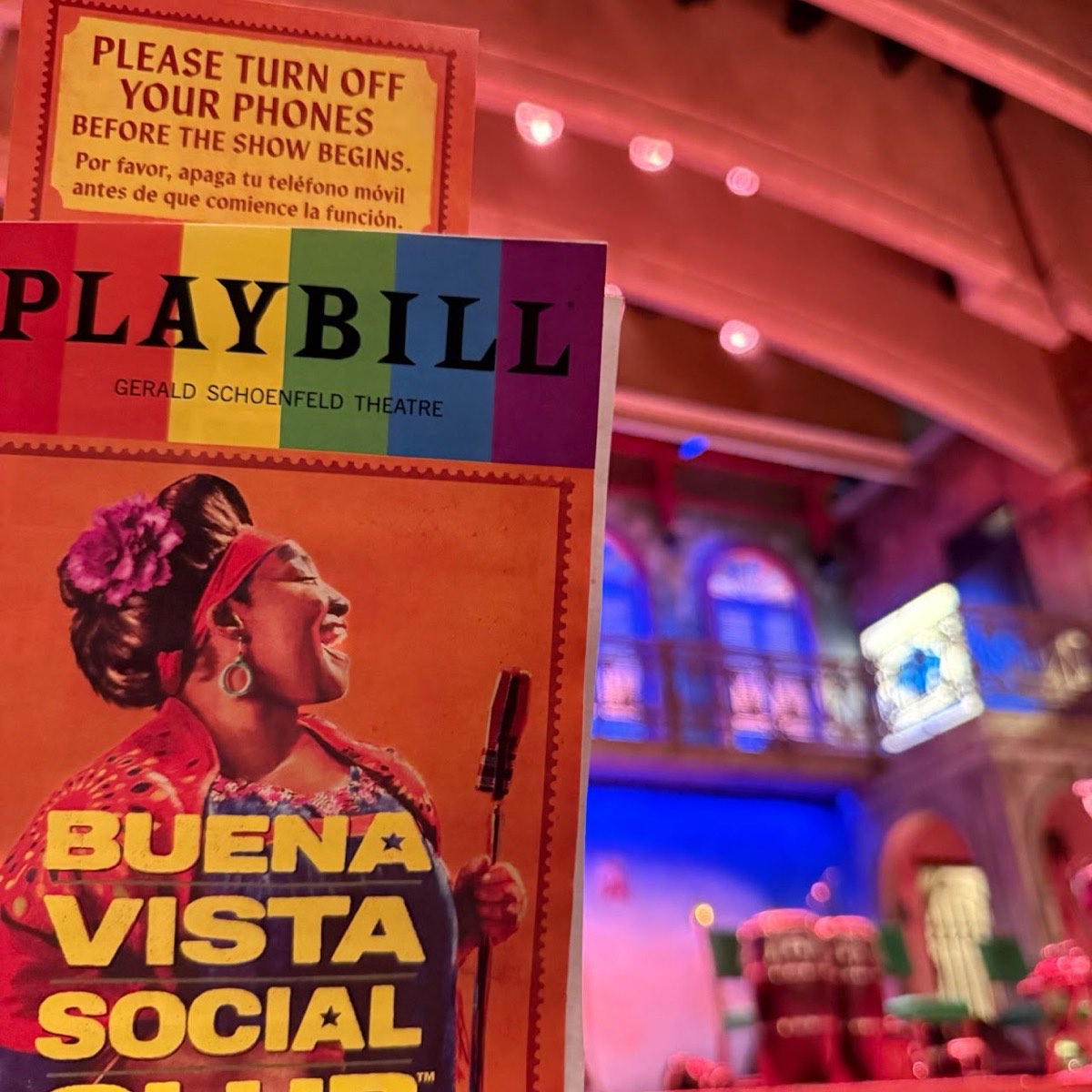
Tonight, I saw Buena Vista Social Club on Broadway, and it exceeded all of my expectations. It has quickly become one of my favorite musicals.
The acting, storyline, and Spanish songs were all incredible. The dancers, especially the women, performed in heels with astonishing precision: executing endless turns, intricate footwork, and breathtaking lifts at an incredibly fast pace. As impressive as the performances were, what captivated me most was the choreography.
Just days before, I had taken an Afro-Cuban dance class with Juju. While watching the musical, I immediately recognized movements associated with Ogún, an Orisha known for strength, iron, and the warrior spirit. It was incredibly satisfying to identify the same sharp, blade-like warrior movements that I had learned and performed only days earlier. Experiencing those movements in a Broadway production gave me a much deeper appreciation for how Afro-Cuban traditions continue to shape contemporary performance.
I also appreciated the musical's historical perspective. As a work of historical fiction, it portrays Cuba during the 1950s, a period of political instability leading up to the Cuban Revolution. The story helped me better understand the social tensions that existed before the revolutionary government came to power while showing how music remained a source of resilience and community.
One of the highlights of the evening came after the performance, when I had the opportunity to converse with Wesley Wray, who portrayed Young Ibrahim. It was a privilege to congratulate him on his performance and receive his autograph.
It was incredibly satisfying to identify the same sharp, blade-like warrior movements that I had learned and performed only days earlier.