
We danced toward the sounds of the drums. Toward rhythms that have been passed down across generations. Toward sounds that carry memory.
The Workshop
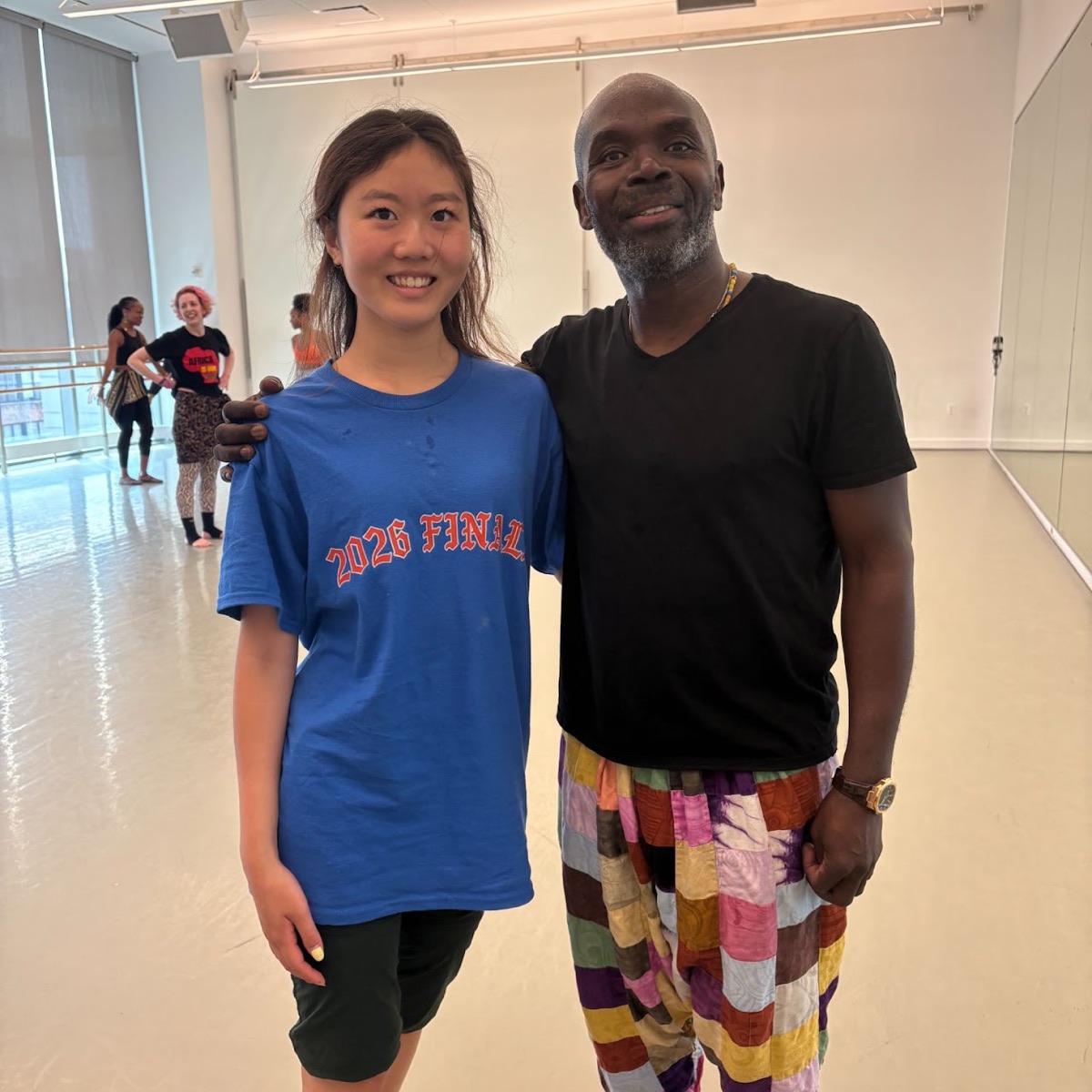
Maguette Camara guided participants through traditional movement practices rooted in the dance traditions of Guinea and West Africa. The class was accompanied by live drumming throughout the entire workshop.
The class began with a nature-centered warmup that encouraged us to connect movement with natural elements such as the wind. One exercise asked us to reach our arms toward the floor and then rapidly sweep them upward toward our bodies, creating the sensation of wind moving through space.
We first learned several movement combinations before performing them across the floor. Unlike many dance classes that emphasize mirrors and visual self-correction, we danced toward the drummers. This shifted my focus away from appearance and toward listening, connection, and musical dialogue.
The rhythmic foundation of the class was created by multiple traditional drums, including the djembe, dunun, kenkeni, and sangban. Each drum contributed a unique voice to the music, creating layered rhythms that guided the movement.
The workshop concluded with a community circle. Each dancer had an opportunity to enter the center and dance while the group celebrated and encouraged one another. At the end, we thanked each drummer through a gesture of respect: reaching our right hand toward the floor and bowing our heads in gratitude.
One of the most memorable aspects of the class was its emphasis on community. Rather than focusing on individual achievement or technical perfection, the workshop emphasized collective participation, celebration, and appreciation.
The experience demonstrated how dance can serve not only as artistic expression but also as a way of honoring culture, community, history, and shared tradition.
Personal Reflection: Connected Through Sweat
All of us were connected through sweat.
I have never been immersed in a room with so much sweat, energy, and life. The drummers performed vigorously for the entire class. Every beat seemed intentional. Their fingertips struck the drums in specific ways, and the pressure of each touch changed the quality of the sound. Some drummers rotated throughout the workshop, taking turns to sustain the intensity of the music.
I was fascinated by the variety of drums. Each one differed in shape, design, sound, and purpose. Some were played entirely with the hands, while others required sticks. Together they created a musical landscape that felt alive.
What struck me most was that we danced toward the drummers rather than toward a mirror.
We danced toward the sounds of the drums. Toward the songs of the earth. Toward rhythms that have been passed down across generations. Toward sounds that carry memory.
Everything felt interconnected—the dancers, the musicians, the drums, and the stories they carried.
As we moved, my perception of the studio transformed. The marley floor no longer felt like a dance surface. It became soil and earth beneath my feet. The studio walls seemed to disappear. The space became wind moving across mountains and open landscapes.
For a moment, dance felt less like performance and more like participation in something much larger than myself.
This class reminded me that movement does not exist independently. Dance is connected to music. Music is connected to people. People are connected to history. Together, they create a living expression of culture and community.