
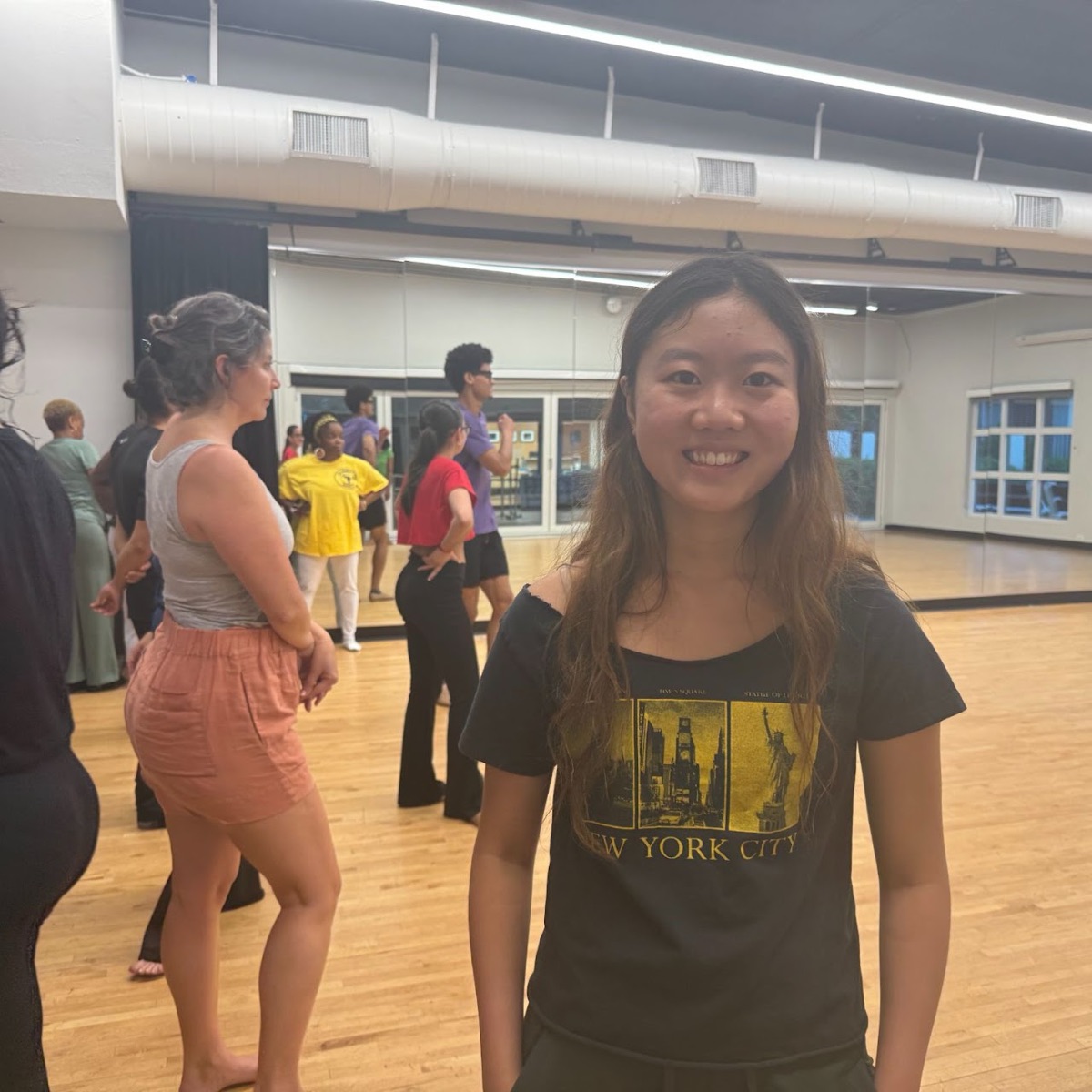
Today's dance class focused on Cuban social dance, with an emphasis on footwork, hip movement, arm gestures, and musicality. Unlike some of the Afro-Cuban folkloric dances I have studied throughout my fellowship, this class emphasized joy, connection, and community. The movements felt social and celebratory, reflecting the ways people gather, interact, and express themselves through dance.
One correction that Ms. Marisol Blanco frequently made was reminding us not to lift our arms as if we were praying to the gods. Instead, she encouraged us to open our arms outward with relaxed, expansive gestures that conveyed enjoyment and confidence. The goal was not spiritual devotion, but social connection. These movements reflected the communal nature of Cuban social dance, where people dance with and for one another.
This class reinforced one of the central ideas of my fellowship: dance is deeply shaped by culture. While Cuban social dances have roots in African traditions, they have evolved over centuries within Cuba's unique social and historical context. Through interactions among African, Indigenous, European, and Caribbean influences, these dances developed characteristics that distinguish them from related traditions in places such as Haiti, Brazil, and Venezuela.
Preservation and Adaptation, Side by Side
Perhaps the most meaningful observation came from looking around the dance studio. Participants included White men and women, Black men and women, Latino women and men, mixed-race dancers, and Asian women, all learning together under the guidance of Ms. Blanco at the Koubek Center. In that moment, I witnessed one of the key themes of my research: cultural traditions can be both preserved and adapted. Afro-Cuban dance continues to maintain connections to its historical and cultural roots while also evolving as new communities engage with it.
Seeing people from many different backgrounds dancing together demonstrated how cultural practices travel across borders and generations. The class became an example of how Afro-Cuban dance has been preserved through teaching and community while simultaneously adapting within the diverse cultural landscape of the United States.